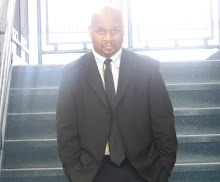
I've been told that an African American will never represent the 180th District as an elected official in any capacity.
It has been mentioned to me that the Latino community in the 180th District, which accounts for about 64% of the population, will never elect an African American against a Latino American because it would be considered an "act of betrayal."
If we continue to make an individual's ethnicity a prerequisite and the deciding factor in electing public servants, we will continue to receive the type of corrupt, incompetent and weak government the 180th District has endured for decades. Continuing to vote for Angel Cruz, the incumbent State Representative from the 180th District or Jonathan Ramos who has lost to him on two occasions based upon his being Latino is as flawed as Mitt Romney's view that a corporation is an individual or the misguided opinions that say Barack Obama is not fit to lead the Republic because of his African American heritage. This kind of thinking has held the 180th district back for far too long; we can do better.
Fact: As a resident I've witnessed very little of the legislative successes of Mr. Cruz and I'm deeply troubled by his lack of effective governing. One thing is clear however--Mr. Cruz has won re-election several times, so defeating him will not be an easy task.
Since his second straight defeat to Mr. Cruz, (2008 and 2010) Jonathan Ramos has been nonexistent in the community. He hasn't produced any plan on how to revitalize the 180th District. Mr. Ramos, as you will remember in 2010, was involved in attempting to unseat Angel Cruz by cheating. He received resources from Ms. Renee Tartaglione, a city worker which she and Mr. Ramos knew was "highly inappropriate." Tartaglione would eventually resign from her post.
In my opinion, neither Mr. Cruz or Mr. Ramos represent the needs and concerns of more than 50,000 residents composed of Puerto Ricans, Colombian Americans, Dominican Americans, Mexican Americans, Asian Americans, Caucasian Americans and African Americans residing in the 180th District. It appears that the only action plan that has been acted upon has been based on "unethical violations and arrogance".
I do believe as an African American, a resident of the 180th District and a candidate for state representative in 2012, I can win. I have a plan--a written initiative that can improve the 180th District. There those who may not agree with my "Vision" plan and "Feed the Children" bill and that is to be expected. However, there is a stark contrast between empty rhetoric and policy that will garner results.
Conversely, I issue a challenge to the incumbent, Mr. Cruz, candidate Jonathan Ramos and anyone else seeking the office of state representative for the 180th District to a series of public debates and let the residents decide which one of us is worthy to lead the community to prosperity.
I am also asking that the residents of the community in which I wish to serve carefully weigh the character, integrity & willingness to work for the people as a measure of standard when voting in the 2012 primary election for state representative. It is time we vote for an individual, not an ethnicity. I am committed to serving my community, not my own self interests.
"Progressives will bring balance to the Republic"
Anthony P. Johnson, Candidate for State Representative 180th District, 2012
Friday, September 2, 2011


Thursday, August 25, 2011
“FEED THE CHILDREN”
Title of Bill: "Feed the Children"
Principal Author: Anthony P. Johnson
Preamble: Millions of children throughout this country are living below the poverty level creating failure in the present and in their future. Part of their problem is undernourishment due to a lack of nutritional food. There are certain steps that can be instated to help end the hunger of the children. Poverty is unlikely to be solved in our lifetimes, but measures can be put into place to help feed the children in a way they are worthy of.
Children who are hungry cannot possibly succeed in school because they don't have the ability to focus on lessons while contemplating a way to stop their hunger. According to information stated by the Food Stamp Program: For over 40 years, the federal Food Stamp Program, now officially named SNAP - the Supplemental Nutrition Assistance Program - has served as a mainline federal social assistance program designed to help low-income families and individuals buy the food they need for good health. The SNAP (Food Stamp) program now helps put nutritious food on the tables of 28 million people every month.
In this statement, it says that the program is designed to help low-income families to buy the food they need for good health. But is the food people are buying with the food stamps nutritious like the Food Stamp Program claims it is? To answer that question, stand in line at your local food market for one hour on any given day and see what people are purchasing with their food stamps. You will see them buying fancy half-sheet birthday cakes, bottles of sugared soda, candy, cookies, snacks, and numerous other unhealthy types of food. Is this the way we are stopping hunger for our children?
Here are some realistic solutions to the problem that could be easily implemented immediately:
SECTION 1: Revamp Food Stamps using the model of the WIC program. Recipients of Food Stamps should be allowed to use these stamps for the same types of items as WIC allows people to buy which is healthy food for the children. This means if people want to buy junk food or fancy cakes, they will have to pay for it out of their cash allocations.
SECTION 2: Every recipient of Welfare Benefits will be issued a valid state identification card for items purchased with food stamps. This will help decrease food stamps “fraud” where people sell their food stamps at a discounted price for cash to support a drug or/alcohol addiction instead of using the Food Stamps to feed their children.
SECTION 3: Every recipient receiving public assistance for more than two years is to be tested for drugs randomly. Individuals that are on medication prescribed by a physician are exempt, but all others must be tested. If they test positive for an illegal substance, the recipient will be provided with drug recovery services and a social worker/child advocate will be appointed to ensure that the children are being fed and clothed properly by way of the welfare benefits.
If the individual tests positive a second time, the allocation of public assistance will be suspended until he/she goes for help.
SECTION 4: Subsidize the working poor who are working-not staying home on welfare--with more benefits such as subsidized healthcare and additional food stamps.
SECTION 5: Provide free mandatory nutritious meals in public, private, and parochial schools throughout the school year with the money saved by Food Stamp abuse.
Copyright, 2011
Principal Author: Anthony P. Johnson
Preamble: Millions of children throughout this country are living below the poverty level creating failure in the present and in their future. Part of their problem is undernourishment due to a lack of nutritional food. There are certain steps that can be instated to help end the hunger of the children. Poverty is unlikely to be solved in our lifetimes, but measures can be put into place to help feed the children in a way they are worthy of.
Children who are hungry cannot possibly succeed in school because they don't have the ability to focus on lessons while contemplating a way to stop their hunger. According to information stated by the Food Stamp Program: For over 40 years, the federal Food Stamp Program, now officially named SNAP - the Supplemental Nutrition Assistance Program - has served as a mainline federal social assistance program designed to help low-income families and individuals buy the food they need for good health. The SNAP (Food Stamp) program now helps put nutritious food on the tables of 28 million people every month.
In this statement, it says that the program is designed to help low-income families to buy the food they need for good health. But is the food people are buying with the food stamps nutritious like the Food Stamp Program claims it is? To answer that question, stand in line at your local food market for one hour on any given day and see what people are purchasing with their food stamps. You will see them buying fancy half-sheet birthday cakes, bottles of sugared soda, candy, cookies, snacks, and numerous other unhealthy types of food. Is this the way we are stopping hunger for our children?
Here are some realistic solutions to the problem that could be easily implemented immediately:
SECTION 1: Revamp Food Stamps using the model of the WIC program. Recipients of Food Stamps should be allowed to use these stamps for the same types of items as WIC allows people to buy which is healthy food for the children. This means if people want to buy junk food or fancy cakes, they will have to pay for it out of their cash allocations.
SECTION 2: Every recipient of Welfare Benefits will be issued a valid state identification card for items purchased with food stamps. This will help decrease food stamps “fraud” where people sell their food stamps at a discounted price for cash to support a drug or/alcohol addiction instead of using the Food Stamps to feed their children.
SECTION 3: Every recipient receiving public assistance for more than two years is to be tested for drugs randomly. Individuals that are on medication prescribed by a physician are exempt, but all others must be tested. If they test positive for an illegal substance, the recipient will be provided with drug recovery services and a social worker/child advocate will be appointed to ensure that the children are being fed and clothed properly by way of the welfare benefits.
If the individual tests positive a second time, the allocation of public assistance will be suspended until he/she goes for help.
SECTION 4: Subsidize the working poor who are working-not staying home on welfare--with more benefits such as subsidized healthcare and additional food stamps.
SECTION 5: Provide free mandatory nutritious meals in public, private, and parochial schools throughout the school year with the money saved by Food Stamp abuse.
Copyright, 2011
Monday, August 22, 2011
“The Value of Effective Educational Leadership”
So at long last Dr. Ackerman is out as Philadelphia's School District Superintendent. We cannot celebrate her departure as if she is exiting the stage triumphantly nor should we dance with glee because the successes were far and few during her tenure.
Dr. Ackerman is leaving but there are still far too many people that remain in place at the School District of Philadelphia, including, the SRC that will continue to place politics and personal gain over resources that the children and dedicated teachers require.
The SDP is in the mist of an uncertain future and until "effective" educational leadership is finally at the helm and corruption is eradicated there will be many more Hornbeck's, Vallas' and Dr. Ackerman's making big promises and delivering on mostly none of them.
“Progressives will bring balance to the Republic”
Anthony P. Johnson, Candidate for State Representative 180th District, 2012
Dr. Ackerman is leaving but there are still far too many people that remain in place at the School District of Philadelphia, including, the SRC that will continue to place politics and personal gain over resources that the children and dedicated teachers require.
The SDP is in the mist of an uncertain future and until "effective" educational leadership is finally at the helm and corruption is eradicated there will be many more Hornbeck's, Vallas' and Dr. Ackerman's making big promises and delivering on mostly none of them.
“Progressives will bring balance to the Republic”
Anthony P. Johnson, Candidate for State Representative 180th District, 2012
We Can End Poverty in the Republic
Creating, developing, and establishing a plan to end poverty means it will cost money, but it is worth every penny that will be spent on eradicating a pestilence that continues to envelop the nation. Let’s stop talking about how great the Republic is and address the issues that are eroding the nation such as poverty.
According to the Census Bureau, statistics establish two grades of food insecurity. Very low food security: In these food-insecure households, normal eating patterns of one or more household members were disrupted and food intake was reduced at times during the year because they had insufficient money or other resources for food. 6.7 million US households (5.7% of all US households) had very low food security at some time during 2008, a 39% increase from 2007 (4.1% of US households). This was the largest increase ever recorded since nationally representative food security surveys were initiated in 1995, as well as the largest year-to-year percentage increase.
The defining characteristic of very low food security is that, at times during the year, the food intake of household members is reduced and their normal eating patterns are disrupted because the household lacks money and other resources for food. On average, households with very low food security at some time during the year experienced it in 7 or 8 months during the year and in 1 to 7 days in each of those months. In 2010, 97% of those classified as having “low food security” reported that an adult had cut the size of meals or skipped meals because there was not enough money for food and 27% reported that an adult did not eat for a whole day because there was not enough money for food
So, who represents the food “insecure?”
• Households with incomes below the poverty line (19.3%)
• Families with children, headed by single women (13.3%)
• Black households (10.1%)
• Hispanic households (8.8%)
• Households in principal cities of metropolitan areas (6.6%)
• In 2009, 43.6 million people were poor, up from 39.8 million in 2008 and 37.3 million in 2007. The nation’s official poverty rate in 2009 was 14.3%, up from 13.2% in 2008--the second statistically significant annual increase in the poverty rate since 2004.
• Between 2008 and 2009, the poverty rate increased for children under the age of 18 from 19.0 percent to 20.7 percent. Thus, 1 in 5 children in the United States live in poverty. Almost half of these children or 9.3% live in “extreme” poverty.
• 16 million low-income households either paid more for rent and utilities than the federal government said is affordable or lived in overcrowded or substandard housing.
There are three main causes of poverty in the Republic:
1. Poverty in the world.
2. The operation of the political and economic system in America which has tended to keep families impoverished.
3. The culture of inequality.
• Poverty in the world: There are a lot of poor people in the world. There are more than 2,000,000,000 people that are poor, and the same amount hungry. As can be imagined, people do not want to be hungry and desperately poor.
• The operation of the US economic and political system: The operation of the US economic and political system has led to certain ethnicities being relatively disenfranchised.
First, in a free enterprise economy, there is competition for jobs, with jobs going to the most qualified. On the other hand, there is almost always a significant amount of unemployment, so that not everyone will get a job, with the major unemployment falling on the least qualified. In the African American community alone is currently at 16%. It might be tempting to indentify them as ‘unemployable’ but what is in fact happening is that the private enterprise system is not generating enough jobs to employ everyone. Second, the top echelon of business has the power to allocate the profits of the enterprise, and certainly they have allocated these profits to themselves in recent years. In essence, the current operation of the Republic’s political system, which should address the major problems of its citizens, is to a great extent not focused on fundamental concerns of poor people.
There are various aspects to the culture of poverty. For example, people are typically segregated by income and often race where jobs are low paid and scarce. This can lead to crime as a way of obtaining income, and also to unemployed men not willing to marry, which can play a significant role in developing a cultural model of single parent families.
The lack of income creates problems, including poor housing, lack of food, health problems and the inability to address needs of one’s children. As a result of this situation, people living in poverty can themselves have patterns of behavior, such as alcoholism or a ‘life of crime’ that are harmful to them and the community.
There are ways that “we, the people” can end poverty in the public:
Politicians:
• Revisit and implement parts of President Johnson’s War on Poverty/Great Society.
• Increase the minimum wage, which currently is estimated to be a wage that keeps people and families well below the poverty line.
• Provide more resources, guidance and opportunities for the poor.
Church, Masjid, Synagogue/Community:
• Empower the poor through education, opportunities for growth, social networks, information, and inclusion in society.
• Empower the poor to challenge the political process and social structures which in fact, keep them poor, such as the current welfare system which encourages welfare dependency instead of economic independence.
School Administrations:
• Provide guaranteed meals in public, private, and parochial schools
In summary, this is not a red state or blue state problem--this is an “American crisis” that’s affecting all of us. So, we can continue to waste time on debating who is or isn’t a citizen and why the wealthy should continue to receive tax breaks after more than two decades, or we can turn our attention to families living next door that are without one of the basic necessities for survival--food. Once and for all-time, let us eradicate poverty in the Republic.
“Progressives will bring balance to the Republic”
Anthony P. Johnson, Candidate for State Representative, 2012
According to the Census Bureau, statistics establish two grades of food insecurity. Very low food security: In these food-insecure households, normal eating patterns of one or more household members were disrupted and food intake was reduced at times during the year because they had insufficient money or other resources for food. 6.7 million US households (5.7% of all US households) had very low food security at some time during 2008, a 39% increase from 2007 (4.1% of US households). This was the largest increase ever recorded since nationally representative food security surveys were initiated in 1995, as well as the largest year-to-year percentage increase.
The defining characteristic of very low food security is that, at times during the year, the food intake of household members is reduced and their normal eating patterns are disrupted because the household lacks money and other resources for food. On average, households with very low food security at some time during the year experienced it in 7 or 8 months during the year and in 1 to 7 days in each of those months. In 2010, 97% of those classified as having “low food security” reported that an adult had cut the size of meals or skipped meals because there was not enough money for food and 27% reported that an adult did not eat for a whole day because there was not enough money for food
So, who represents the food “insecure?”
• Households with incomes below the poverty line (19.3%)
• Families with children, headed by single women (13.3%)
• Black households (10.1%)
• Hispanic households (8.8%)
• Households in principal cities of metropolitan areas (6.6%)
• In 2009, 43.6 million people were poor, up from 39.8 million in 2008 and 37.3 million in 2007. The nation’s official poverty rate in 2009 was 14.3%, up from 13.2% in 2008--the second statistically significant annual increase in the poverty rate since 2004.
• Between 2008 and 2009, the poverty rate increased for children under the age of 18 from 19.0 percent to 20.7 percent. Thus, 1 in 5 children in the United States live in poverty. Almost half of these children or 9.3% live in “extreme” poverty.
• 16 million low-income households either paid more for rent and utilities than the federal government said is affordable or lived in overcrowded or substandard housing.
There are three main causes of poverty in the Republic:
1. Poverty in the world.
2. The operation of the political and economic system in America which has tended to keep families impoverished.
3. The culture of inequality.
• Poverty in the world: There are a lot of poor people in the world. There are more than 2,000,000,000 people that are poor, and the same amount hungry. As can be imagined, people do not want to be hungry and desperately poor.
• The operation of the US economic and political system: The operation of the US economic and political system has led to certain ethnicities being relatively disenfranchised.
First, in a free enterprise economy, there is competition for jobs, with jobs going to the most qualified. On the other hand, there is almost always a significant amount of unemployment, so that not everyone will get a job, with the major unemployment falling on the least qualified. In the African American community alone is currently at 16%. It might be tempting to indentify them as ‘unemployable’ but what is in fact happening is that the private enterprise system is not generating enough jobs to employ everyone. Second, the top echelon of business has the power to allocate the profits of the enterprise, and certainly they have allocated these profits to themselves in recent years. In essence, the current operation of the Republic’s political system, which should address the major problems of its citizens, is to a great extent not focused on fundamental concerns of poor people.
There are various aspects to the culture of poverty. For example, people are typically segregated by income and often race where jobs are low paid and scarce. This can lead to crime as a way of obtaining income, and also to unemployed men not willing to marry, which can play a significant role in developing a cultural model of single parent families.
The lack of income creates problems, including poor housing, lack of food, health problems and the inability to address needs of one’s children. As a result of this situation, people living in poverty can themselves have patterns of behavior, such as alcoholism or a ‘life of crime’ that are harmful to them and the community.
There are ways that “we, the people” can end poverty in the public:
Politicians:
• Revisit and implement parts of President Johnson’s War on Poverty/Great Society.
• Increase the minimum wage, which currently is estimated to be a wage that keeps people and families well below the poverty line.
• Provide more resources, guidance and opportunities for the poor.
Church, Masjid, Synagogue/Community:
• Empower the poor through education, opportunities for growth, social networks, information, and inclusion in society.
• Empower the poor to challenge the political process and social structures which in fact, keep them poor, such as the current welfare system which encourages welfare dependency instead of economic independence.
School Administrations:
• Provide guaranteed meals in public, private, and parochial schools
In summary, this is not a red state or blue state problem--this is an “American crisis” that’s affecting all of us. So, we can continue to waste time on debating who is or isn’t a citizen and why the wealthy should continue to receive tax breaks after more than two decades, or we can turn our attention to families living next door that are without one of the basic necessities for survival--food. Once and for all-time, let us eradicate poverty in the Republic.
“Progressives will bring balance to the Republic”
Anthony P. Johnson, Candidate for State Representative, 2012
Monday, August 15, 2011
"If We, the Adults"
When we, the adults, toss aside our youth like Tuesday's garbage, they will fight back--in a violent way.
When we, the adults, invest more funding in horse racing and ensure that thoroughbreds are well fed while children wake-up and go to bed hungry--they will fight back in a violent way.
When we, the adults, de-fund public schools, layoff great teachers, and throw a child in a classroom with 40 other kids that are illiterate and lack the basic resources that schools need to produce future leaders--they will fight back in a violent way.
If we, the adults, permanently close safe and productive environments such as after school programs and eliminate youth employment programs, thereby, forcing them to roam aimlessly throughout the community--they will fight back in a violent way.
It's safe and convenient for those individuals to stand in a House of Worship and ostracize the misguided youth for a lack of effective parenting. These "so-called leaders"--but most definitely not mine--are talking tough rather than taking action to change the outcome of the dark path that our youth are embarking on. I give honor to the mentors, teachers, child advocates, and those individuals that with limited resources are on the front lines daily to stem this pestilence of senseless violence perpetrated by "our" youth. Their actions speak louder than pointless rhetoric.
If we, the adults, keep feeding a child a daily allowance of self hate--they will boomerang that hate onto an unsuspecting society that will have dire consequences on every citizen in the Republic.
"Progressives will bring balance to the Republic"
Anthony P. Johnson, Candidate for State Representative 180th District, 2012
When we, the adults, invest more funding in horse racing and ensure that thoroughbreds are well fed while children wake-up and go to bed hungry--they will fight back in a violent way.
When we, the adults, de-fund public schools, layoff great teachers, and throw a child in a classroom with 40 other kids that are illiterate and lack the basic resources that schools need to produce future leaders--they will fight back in a violent way.
If we, the adults, permanently close safe and productive environments such as after school programs and eliminate youth employment programs, thereby, forcing them to roam aimlessly throughout the community--they will fight back in a violent way.
It's safe and convenient for those individuals to stand in a House of Worship and ostracize the misguided youth for a lack of effective parenting. These "so-called leaders"--but most definitely not mine--are talking tough rather than taking action to change the outcome of the dark path that our youth are embarking on. I give honor to the mentors, teachers, child advocates, and those individuals that with limited resources are on the front lines daily to stem this pestilence of senseless violence perpetrated by "our" youth. Their actions speak louder than pointless rhetoric.
If we, the adults, keep feeding a child a daily allowance of self hate--they will boomerang that hate onto an unsuspecting society that will have dire consequences on every citizen in the Republic.
"Progressives will bring balance to the Republic"
Anthony P. Johnson, Candidate for State Representative 180th District, 2012
Monday, August 8, 2011
"What Took Ya So Long?"
Mr. Nutter is ticked-off due to the recent behavior of some youth banding together to inflict physical and mental violence on unsuspecting, law abiding Philadelphians and now he want to enforce the curfew laws. The only problem with this initiative is the mayor should have enforced the law when our misguided youth began wreaking havoc on the city--a year ago. Mayor Nutter has proven time after time that he cannot effectively lead, pure and simple. And just like the incompetent Speaker of the House John Boehner; Mr. Nutter is one of the “truly remarkable inept” leaders Philadelphia has ever witnessed.
"Progressives will bring balance to the Republic"
Anthony P. Johnson
"Progressives will bring balance to the Republic"
Anthony P. Johnson
Friday, August 5, 2011
“Who You Calling President Hoover?”
President Herbert Hoover was determined--to a catastrophic fault in his refusal to allow the Republic’s government to assist the starving, the jobless and the homeless through government sanctioned programs because some say he viewed such behaviors as being a prelude to a Socialist and Communist society.
Is President Obama following the same path?
President Obama faces a situation more akin to the one Herbert Hoover was forced to deal with because the economy is still tanking, unemployment is still rising and consumer spending is still falling.
Hoover had been the American most suited to be president. He had performed masterfully as head of the American Relief Administration after World War I. Hoover came into the presidency as one of the foremost proponents of public-private cooperation—what was termed "volunteerism"-- to maintain a high-growth economy. Volunteerism was not premised on governmental coercion or intervention, which Hoover feared would destroy the foundation of American philosophy based upon individualism and self-reliance, but on cooperation among individuals and groups. Hoover supported regulating industries such as radio broadcasting and aviation that he believed served the public good. But he preferred a voluntary, non-governmental approach to economic matters, the better, he reasoned, to protect what he called the "American character".
The economic crisis that struck the United States in the late 1920s was all-encompassing, however. Having both domestic and international causes and effects, the Great Depression afflicted almost every sector of the American economy, revealing serious structural weaknesses that resulted in high unemployment (25%), low economic growth, and financial instability. Most important, the Great Depression stole the citizens’ confidence and will. The Great Depression was a stern test for Hoover's approach and one that proved too difficult for him to address effectively. His involuntariness-inspired persuasion and programs failed to stimulate the consumption and production needed to jump-start the economy.
During Mr. Obama's first months in office, the president and his chief economic advisers, White House aide Larry Summers and Secretary of the Treasury Tim Geithner, most likely underestimated the economic crisis they faced. Obama would repeatedly refer to it as a "financial crisis," inferring that if the government was able to prevent the banks from going under; they would begin loaning again to the citizenry and small businesses and thereby, stimulate the economy and increase resources.
The stimulus package that Congress passed exceeded any previous attempts to counter a financial downturn. It included funds for improving education and subsidizing the development of green and biotechnology industries--two areas where the nation could find new outlets for private investment and growth. The Obama administration was also quick to bail out the Republic’s automobile industry.
But the question with Obama--just as it was with Hoover is whether his efforts, which are going in the in the right direction, will prove sufficient to the Republic and its citizens. Although the stimulus package has promoted growth, it is largely in non-tradable private and government services. Mr. Obama’s vision of promoting green growth from windmills to electric cars is another good idea, but Asia and Western Europe is way ahead of the United States in these industries and are putting far more resources into them than the Republic is achieving. The size of the stimulus package is valiantly keeping unemployment below double-digits--but for how long? Unfortunately, forced to embrace half-measures, President Obama, like President Hoover, could fail to meet the challenges of the economic downturn.
Hoover's principal failing was ideological. He wasn't willing to do what was necessary because he feared the growth of an all-consuming Republic state and because he thought budget deficits would end up receding rather than spurring economic growth. Obama and his advisers are not so much victims of self inflicted ideology, but rather the politics, geopolitics, and other people's ideology. If Obama wanted to undertake a dramatic government-led re-invigoration of the Republics economy--he has and will continue to be blocked by the Tea/Republicans as well some so-called Democrats.
President Obama is not making the same mistakes as Hoover or facing quite the same situation, but Hoover's example shows that an individual who is highly qualified to be president and who boasts significant accomplishments while in office can still fail because of the enormity of the challenges he faces. Obama has achieved success in getting legislation through Congress, including his national health care policies and is brilliantly calculating initiatives to pull the Republic out of its current starving, jobless and homeless slump; but he could still fail and in the process harm his presidency.
I must reiterate, President Obama did not create the current economic depression in America; but, the Tea/Republican Party will damn sure attempt to pin it on his presidency if he is unsuccessful in resuscitating the economy. Hoover is the scapegoat for the Great Depression when in fact it was under Calvin Coolidge that began America’s free-fall into financial and unemployment purgatory during the 1920’s. See the parallel?
If President Obama is defeated in 2012 and replaced with Romney, Pawlenty, Gingrich or Bachmann, all who are “woefully” ill-equipped to deal with the challenges of the 21st century--this will accelerate the Republic’s decline.
“Progressives will bring balance to the Republic”
Anthony P. Johnson, Candidate for State Representative 180th District, 2012
Is President Obama following the same path?
President Obama faces a situation more akin to the one Herbert Hoover was forced to deal with because the economy is still tanking, unemployment is still rising and consumer spending is still falling.
Hoover had been the American most suited to be president. He had performed masterfully as head of the American Relief Administration after World War I. Hoover came into the presidency as one of the foremost proponents of public-private cooperation—what was termed "volunteerism"-- to maintain a high-growth economy. Volunteerism was not premised on governmental coercion or intervention, which Hoover feared would destroy the foundation of American philosophy based upon individualism and self-reliance, but on cooperation among individuals and groups. Hoover supported regulating industries such as radio broadcasting and aviation that he believed served the public good. But he preferred a voluntary, non-governmental approach to economic matters, the better, he reasoned, to protect what he called the "American character".
The economic crisis that struck the United States in the late 1920s was all-encompassing, however. Having both domestic and international causes and effects, the Great Depression afflicted almost every sector of the American economy, revealing serious structural weaknesses that resulted in high unemployment (25%), low economic growth, and financial instability. Most important, the Great Depression stole the citizens’ confidence and will. The Great Depression was a stern test for Hoover's approach and one that proved too difficult for him to address effectively. His involuntariness-inspired persuasion and programs failed to stimulate the consumption and production needed to jump-start the economy.
During Mr. Obama's first months in office, the president and his chief economic advisers, White House aide Larry Summers and Secretary of the Treasury Tim Geithner, most likely underestimated the economic crisis they faced. Obama would repeatedly refer to it as a "financial crisis," inferring that if the government was able to prevent the banks from going under; they would begin loaning again to the citizenry and small businesses and thereby, stimulate the economy and increase resources.
The stimulus package that Congress passed exceeded any previous attempts to counter a financial downturn. It included funds for improving education and subsidizing the development of green and biotechnology industries--two areas where the nation could find new outlets for private investment and growth. The Obama administration was also quick to bail out the Republic’s automobile industry.
But the question with Obama--just as it was with Hoover is whether his efforts, which are going in the in the right direction, will prove sufficient to the Republic and its citizens. Although the stimulus package has promoted growth, it is largely in non-tradable private and government services. Mr. Obama’s vision of promoting green growth from windmills to electric cars is another good idea, but Asia and Western Europe is way ahead of the United States in these industries and are putting far more resources into them than the Republic is achieving. The size of the stimulus package is valiantly keeping unemployment below double-digits--but for how long? Unfortunately, forced to embrace half-measures, President Obama, like President Hoover, could fail to meet the challenges of the economic downturn.
Hoover's principal failing was ideological. He wasn't willing to do what was necessary because he feared the growth of an all-consuming Republic state and because he thought budget deficits would end up receding rather than spurring economic growth. Obama and his advisers are not so much victims of self inflicted ideology, but rather the politics, geopolitics, and other people's ideology. If Obama wanted to undertake a dramatic government-led re-invigoration of the Republics economy--he has and will continue to be blocked by the Tea/Republicans as well some so-called Democrats.
President Obama is not making the same mistakes as Hoover or facing quite the same situation, but Hoover's example shows that an individual who is highly qualified to be president and who boasts significant accomplishments while in office can still fail because of the enormity of the challenges he faces. Obama has achieved success in getting legislation through Congress, including his national health care policies and is brilliantly calculating initiatives to pull the Republic out of its current starving, jobless and homeless slump; but he could still fail and in the process harm his presidency.
I must reiterate, President Obama did not create the current economic depression in America; but, the Tea/Republican Party will damn sure attempt to pin it on his presidency if he is unsuccessful in resuscitating the economy. Hoover is the scapegoat for the Great Depression when in fact it was under Calvin Coolidge that began America’s free-fall into financial and unemployment purgatory during the 1920’s. See the parallel?
If President Obama is defeated in 2012 and replaced with Romney, Pawlenty, Gingrich or Bachmann, all who are “woefully” ill-equipped to deal with the challenges of the 21st century--this will accelerate the Republic’s decline.
“Progressives will bring balance to the Republic”
Anthony P. Johnson, Candidate for State Representative 180th District, 2012
Subscribe to:
Posts (Atom)